The name Kandy has been derived from the Kandyan empire which ruled Sri Lanka for almost four centuries. We all wondered why this place is called Kandy, and all our doubts were cleared after visiting this place.
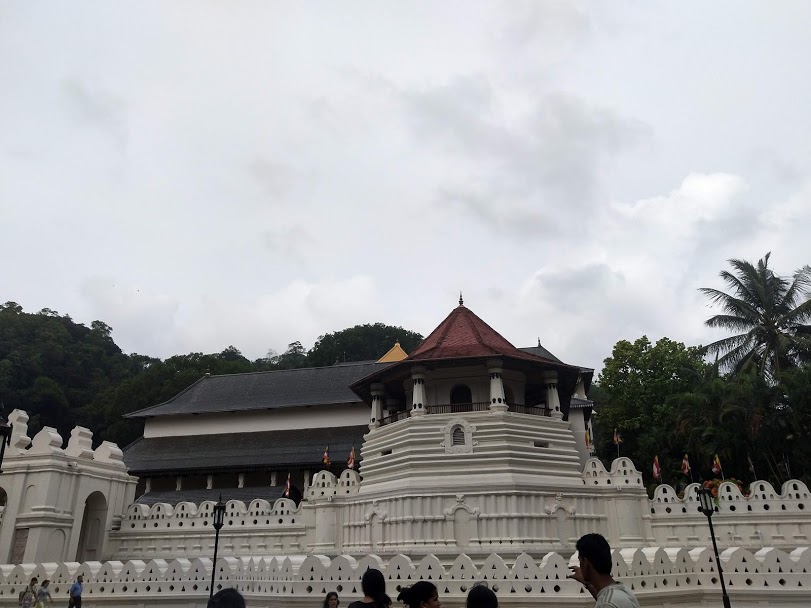
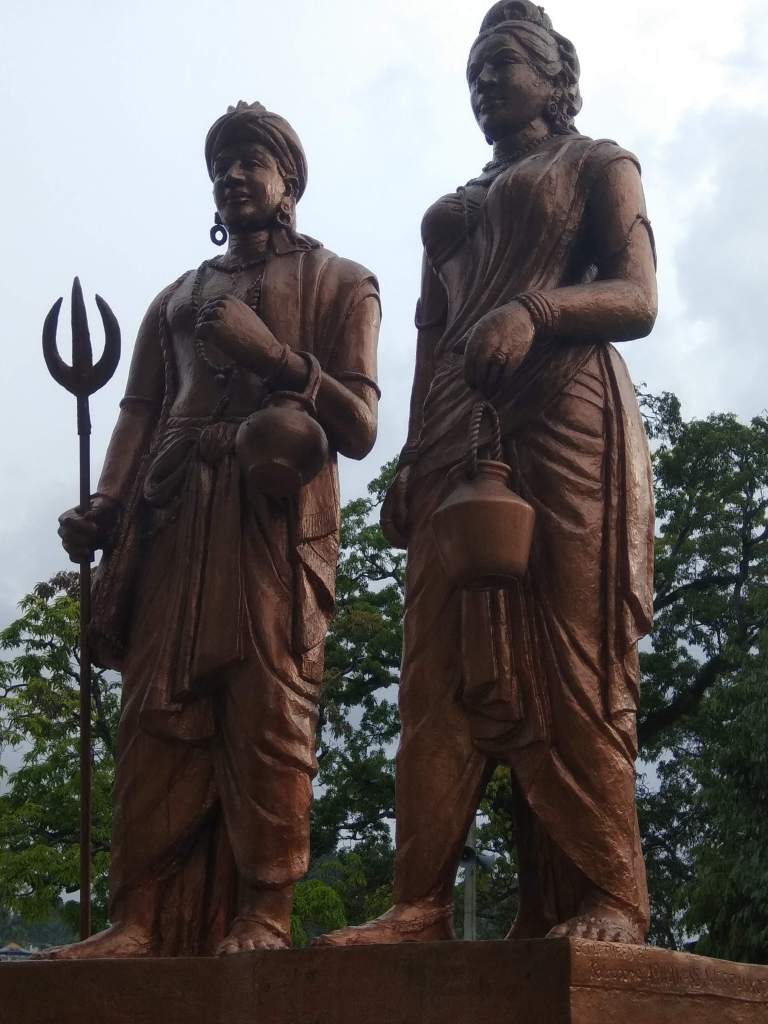
The Kandy Palace is also known for the temple of sacred tooth relic, wherein the tooth of lord buddha was brought in by Princess Hemamali and Prince Danthakumara and thereafter preserved here. It is believed that whoever holds the relic holds the governance of the country.
There is an entrance fees of 1000 Sri Lankan Rupees. We were so exhausted travelling the whole day that we were actually not interested to go inside. But our Guide insisted us to visit this even if we are tired and we are so glad that we did.
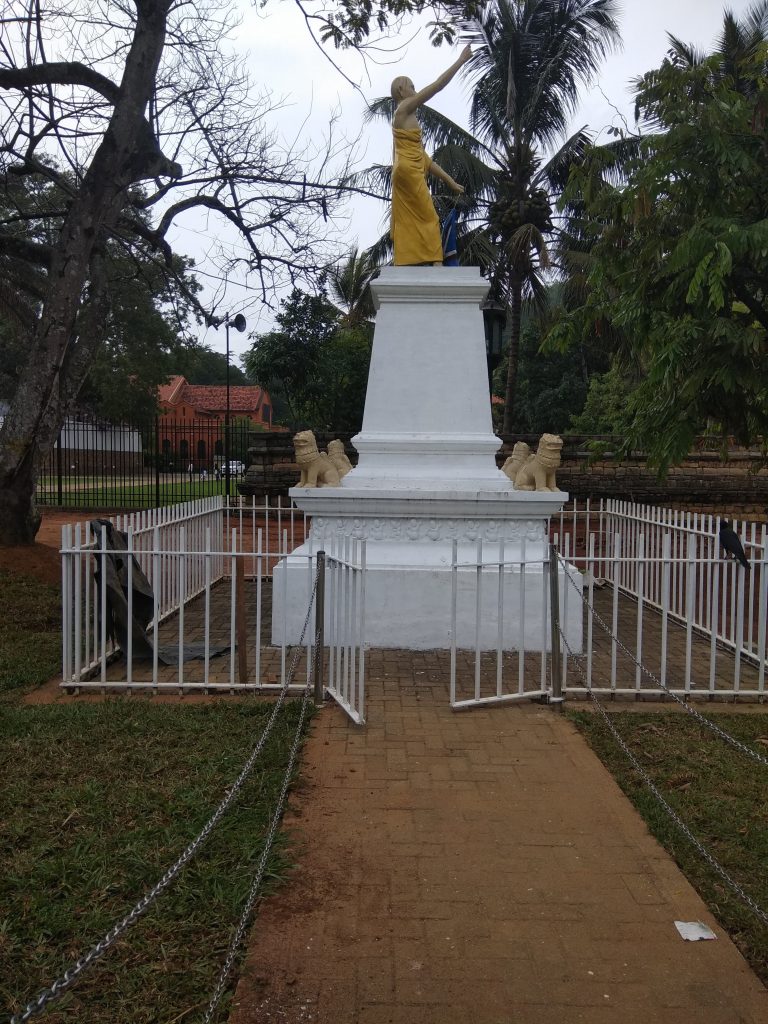
The palace garden is grand and in between one would find statues of the brave souls and famous individuals of Sri Lanka. The Kandy lake besides the palace is beautiful and relaxing at the same time.
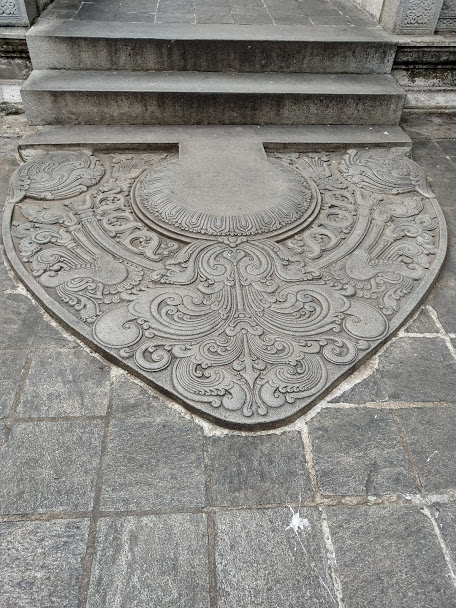
The entrance also known as the Mahawahalkada, welcomes you with this beautiful and intricate stone carving which amazed me as an architecture lover.
So I researched about it and it’s called the Sandakada Pahana, also known as Moon-stone, an elaborately carved semi-circular stone slab is a unique feature of the Sinhalese architecture and is usually placed at the bottom of staircases and entrances.
The palace is huge and is divided into various areas to perform different activities.
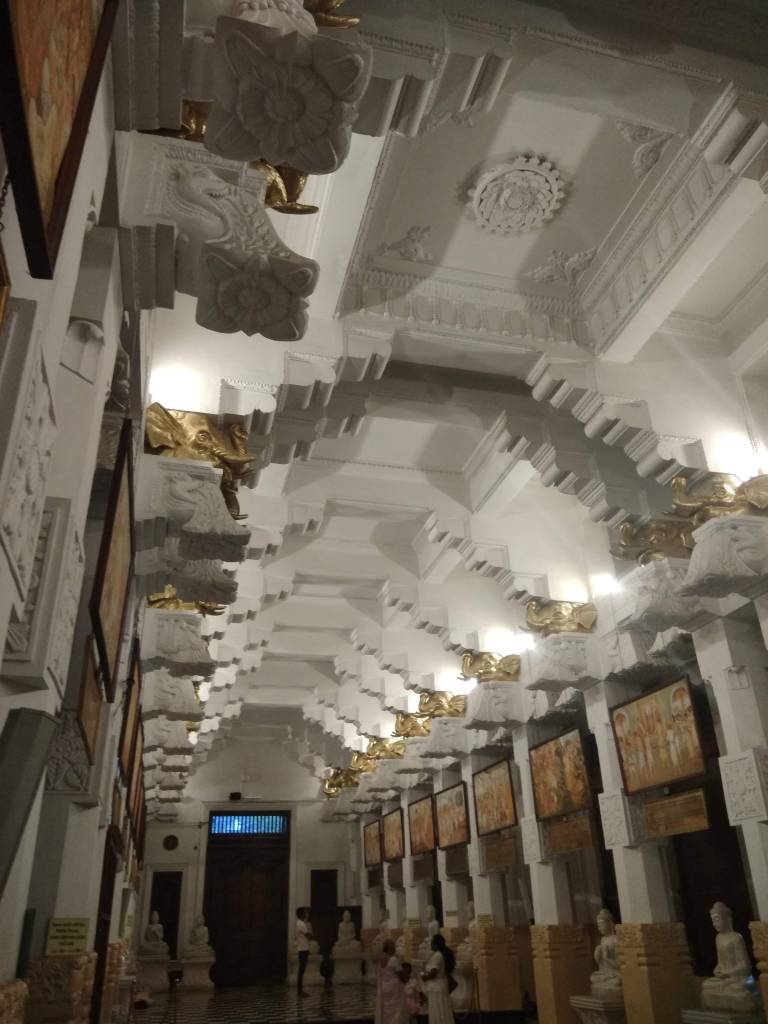
As soon as you enter the palace premise, there is a stairway which leads you to the sacred tooth relic temple, the hallway and the entire temple interior is painted white, which symbolises purity.There is a tunnel passage which is inticately handpainted, something which i was extremely mesmerised.
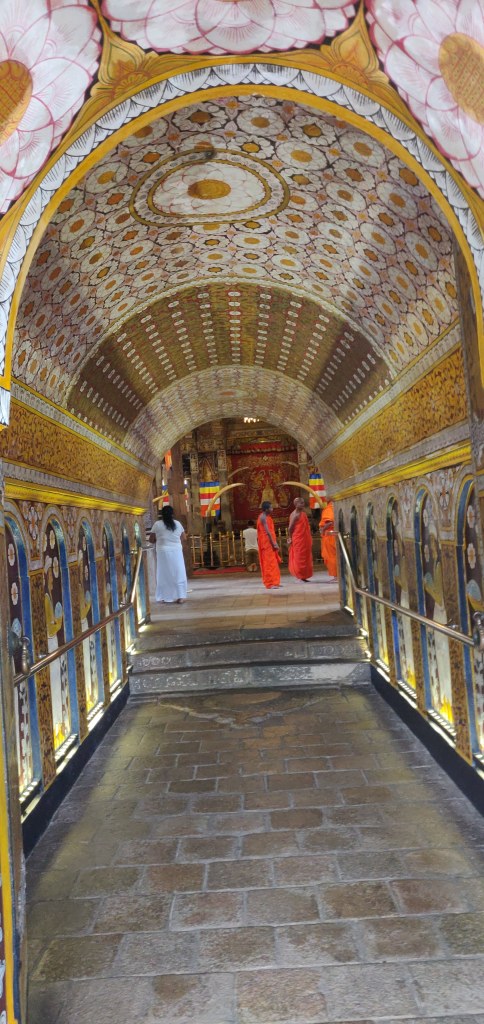
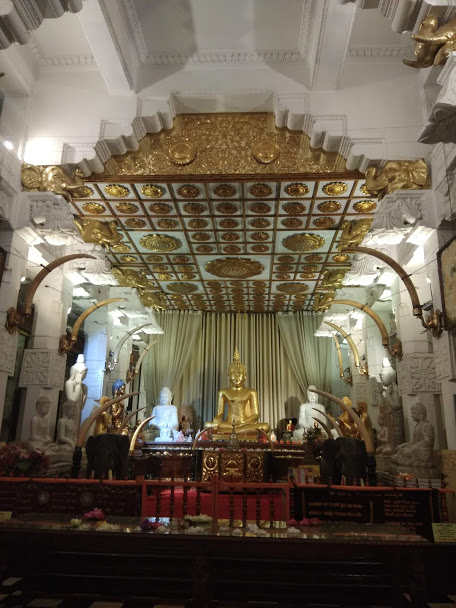
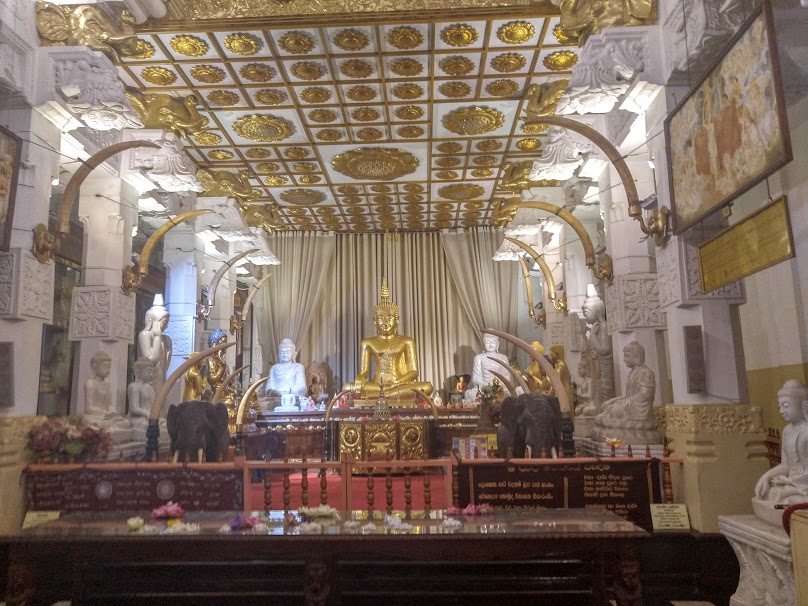
Ornately decorated golden inside; the temple is magnificent and so peaceful. You can find the Buddhist five colour flags along hallway with huge elephant tusks guarding the main chamber where the relic is placed on a gold lotus flower and enshrined inside a nested seven layered jewelled casket.
On Kandy annual festival this casket is paraded around the streets of Kandy on the back of an elephant (sacred animal of Lord Buddha). The main shrine is a two storied building.
According to legend, there was once a severe drought and the Tooth Relic was taken out of its shrine and a great procession was held for seven days. This ended the drought and started the tradition of the Perahera Festival in Kandy thereafter.
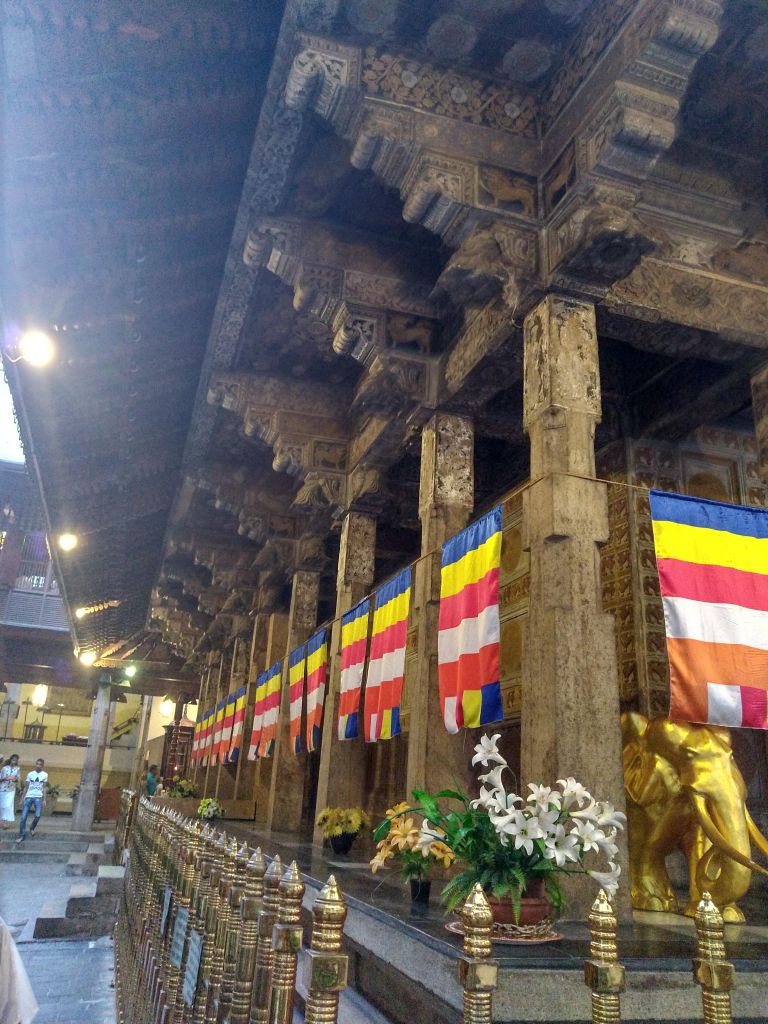
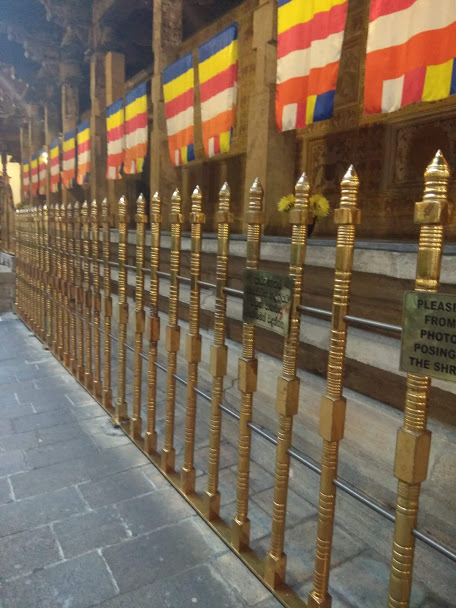
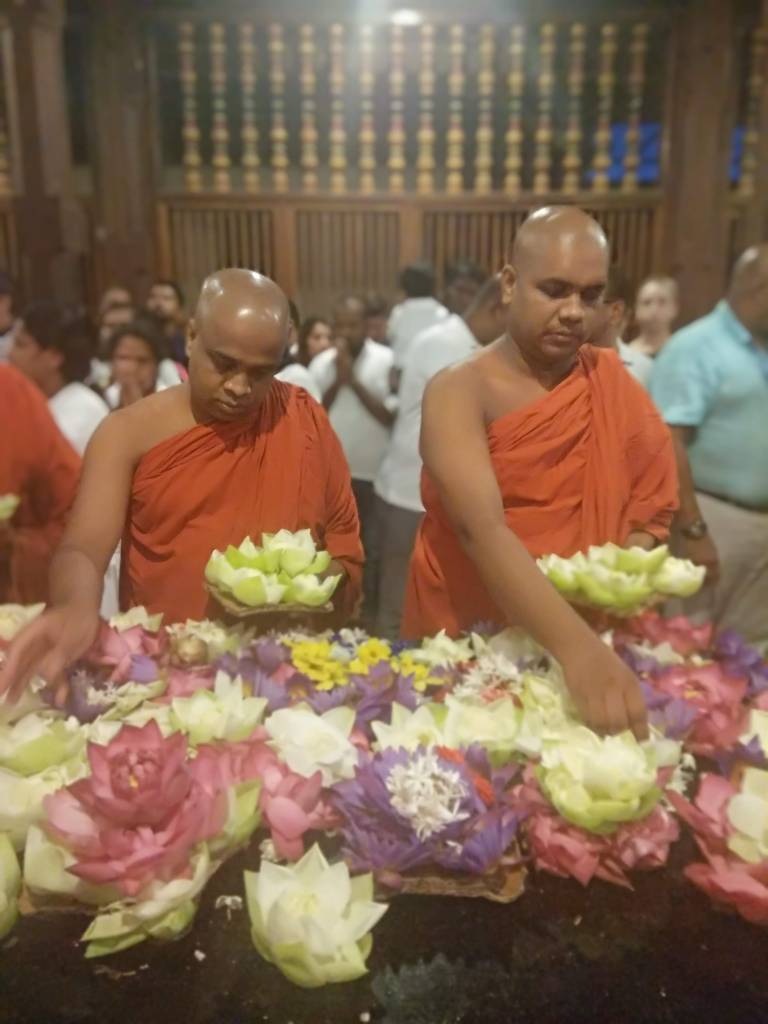
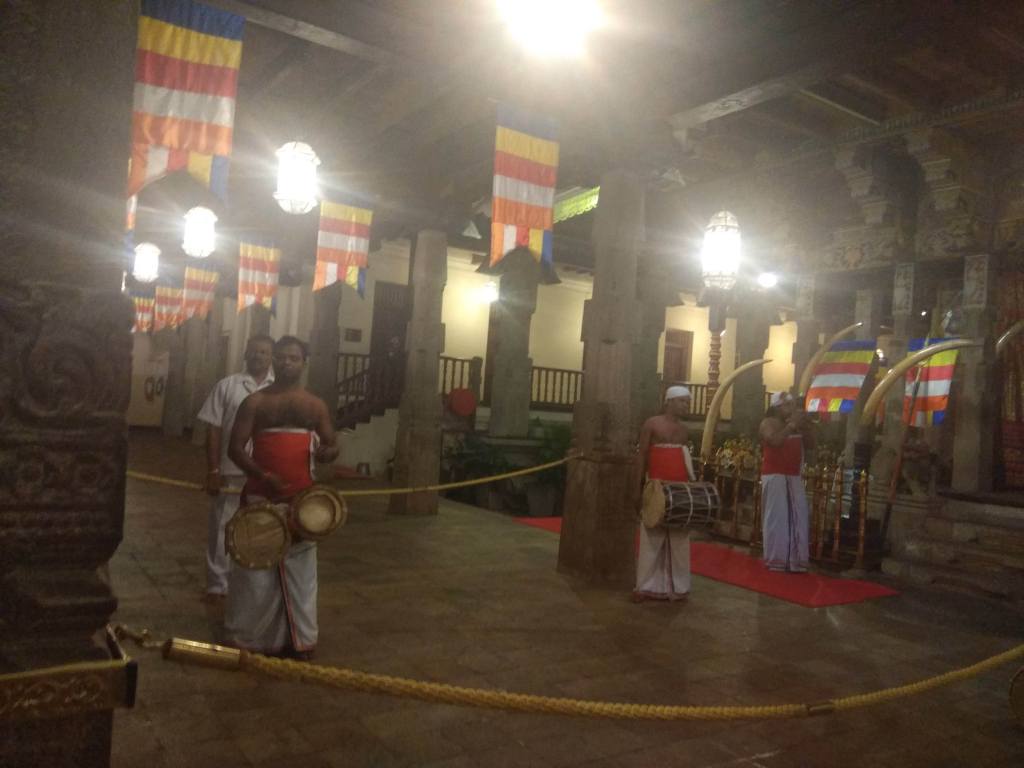
This precious relic attracts white-clad pilgrims, bearing lotus blossoms and frangipani mostly on Wednesdays. Every Wednesday there is a special ritual performed in the temple which attracts plenty of devotees to the temple. On Wednesdays, there is a symbolic bathing of the relic with an herbal preparation made from scented water and fragrant flowers. This holy water is believed to contain healing powers and is distributed among those present.
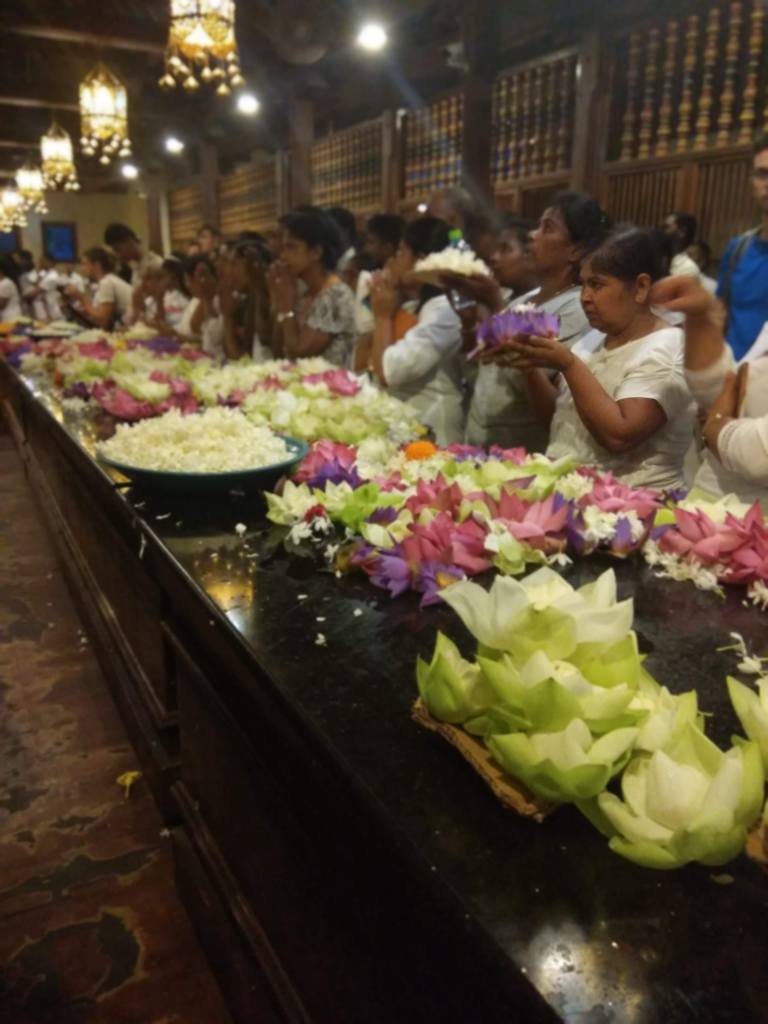
We were so lucky to have visited on a Wednesday, and witness this special ritual. The flowers offered by the devotees are beautifully and symmetrically decorated on the golden platform in the front of the main temple also the whole complex is wonderfully scented with flowers and incense. Rituals are performed three times daily: at dawn, at noon and in the evenings.
the music usec in the video is the religious tune played during the ritual
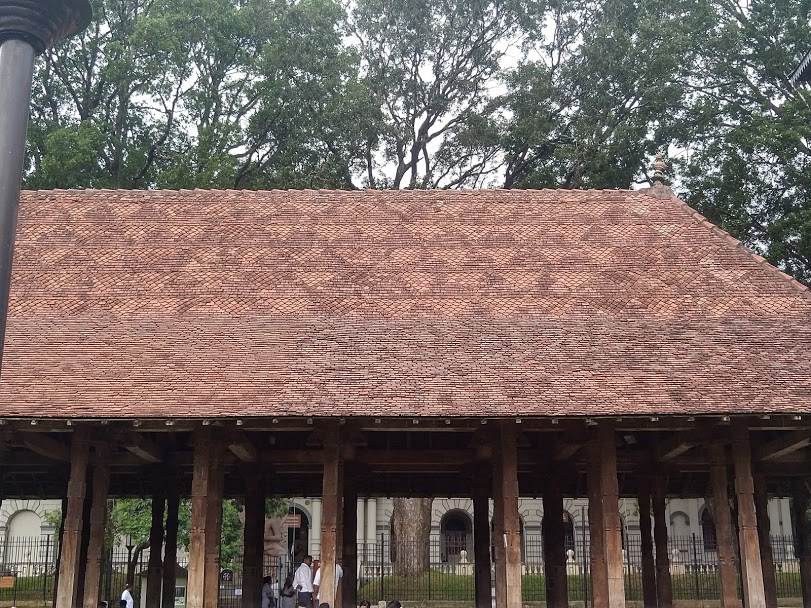
The Magul Maduwa or Royal Audience Hall, constructed with finely carved wood, is where the king met his ministers and carried out his daily administrative tasks. The building was also known as the “Maha Naduwa” or royal court which was utilised for religious and national festivities connected with the Kandyan Court. This building pretty much reminded me of Temples in Kerala with sloping roof with shades of brown being the prominent feature.
We next headed towards the building adjacent to the temple. The golden decorated, magnificent hall inside has a Golden buddha statues along with the paintings of stories of how the tooth relic was brought to Kandy.
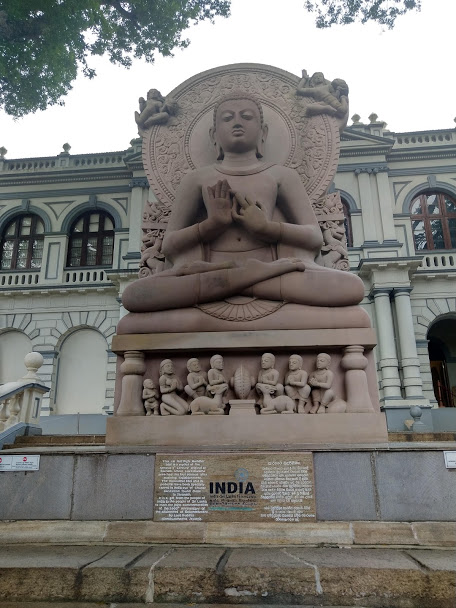
Then on our way to the museum we saw a buddha statue which was gifted by India as a sign of friendship for the 2600th anniversary of enlightenment of Buddha.
Talking about the museum its beautifully made and maintained and I must say the presentation is also aesthetically appealing. The museum consists of artifacts, weapons, costumes of Kandian era. Also, there is a separate section for Buddha statues and their representation in different countries. I must say that this is one of the most beautiful museums I have ever visited. I was really mesmerised by the glittery golden decoration on each and every art of the display. Photography is prohibited here.
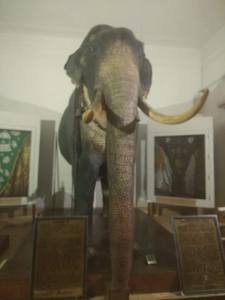
Next to the museum there is a huge building known as the Rajah tusker hall which beholds the stuffed remains of Rajah, A national treasure of Sri Lanka. He was the chief elephant for 37 years who carried the sacred casket during the annual festival in Kandy. Thanks to Taxidermy Rajah looks alive in the museum.
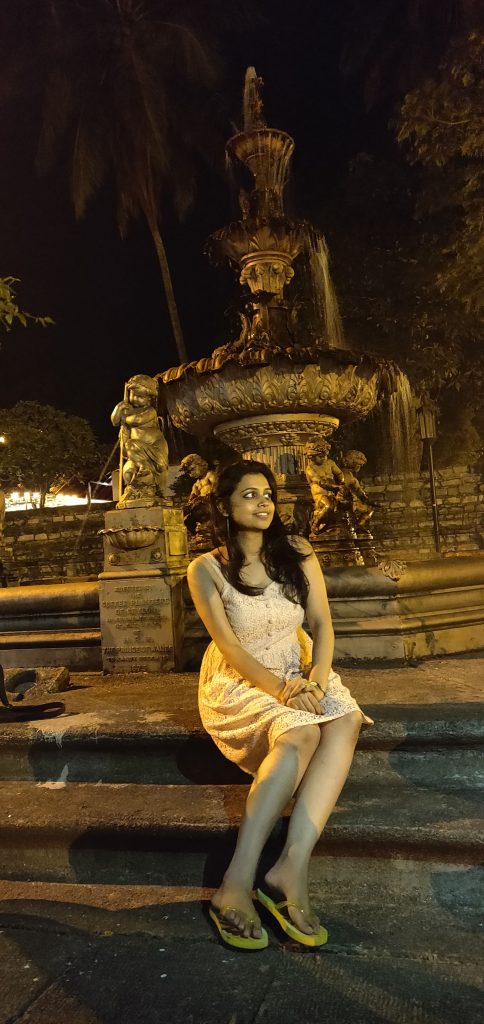
The last attraction near the palace building is the ancient fountain which was constructed by the coffee planters on the visit of Prince of Wales Edward & in 1873. Its built in the shape of a coffee flowers and is said to have manufactured in Glasgow and later assembled here .
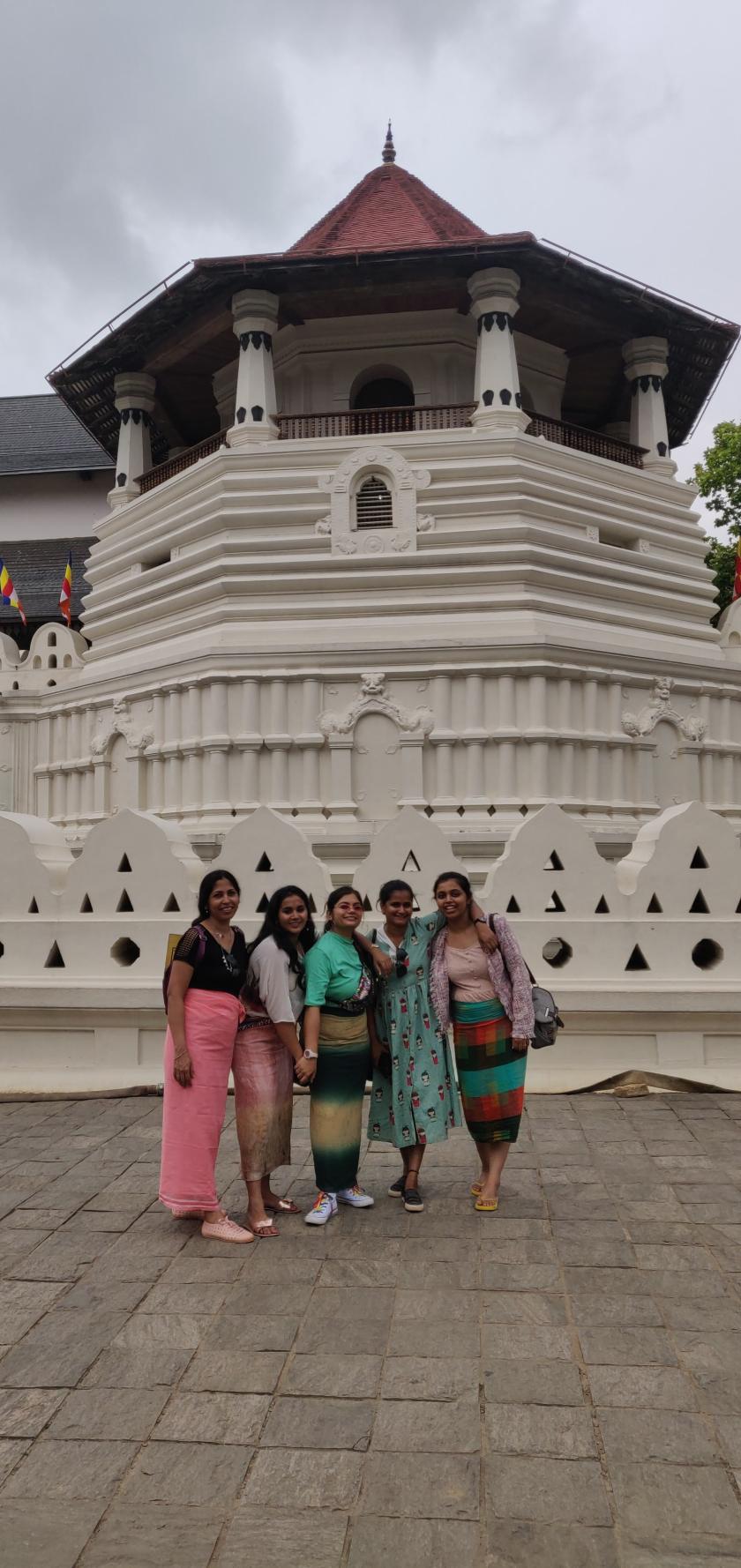
Tips : Its a religious place so short clothes are not allowed carry a sarong and jacket while visiting religious placex in Sri Lanka. We were not aware of this fact but luckily we all usually carry a jacket and a dupatta with us.
The Kandy palace will take you to the history of Sri Lanka in a luxurious way
Harrytinkers
 Harrytinkers travelog